MTA NYCT Rutgers Tube LED Lighting Modernization
Replacing more than a century of aging fluorescent and HID fixtures in one of New York’s oldest under-river subway tunnels — with MTLx LED fixtures and clearNET wireless mesh monitoring.
A 115-Year-Old Tunnel with 21st-Century Safety Requirements
The Rutgers Tube, constructed in 1908 as part of the original Interborough Rapid Transit system, is one of the oldest continuously operating under-river transit tunnels in North America. Running beneath the East River to connect Brooklyn and Manhattan, it carries R-train service through a confined, high-humidity environment that taxes every electrical system installed within it. By the time this lighting modernization program was scoped, the tunnel was still relying on a mix of aging fluorescent strip fixtures and metal-halide HID units — a combination that had grown increasingly unreliable and expensive to maintain.
The core problem was not simply fixture age. In tunnel environments, conventional LED luminaires with discrete electronic drivers are chronically vulnerable to thermal failure. A subway tunnel can see sustained ambient temperatures above 100°F during summer peak operations, and driver components — electrolytic capacitors in particular — degrade rapidly under those conditions. The MTA had documented a pattern of per-fixture LED driver failures in earlier pilot installations that drove maintenance costs and created compliance gaps in emergency egress lighting coverage.
NFPA 130 §8.4 requires that emergency egress illumination remain functional at end-of-rated-runtime — a requirement that failing drivers cannot satisfy. With approximately 4,000+ fixture positions spread across the tube’s trackbed walls, columns, and emergency egress pathways, the MTA needed a solution that addressed thermal reliability at the architectural level, not just at the component level. The replacement program also needed to be executed without extended service disruptions, working within the narrow overnight maintenance windows typical of a 24/7 subway operation.
MTLx AC-Driven Architecture and clearNET Wireless Monitoring
Clear-Vu Lighting specified the MTLx LED tunnel fixture series for the Rutgers Tube, marking the first major MTA installation of the MTLx platform. The selection was driven by a fundamental architectural distinction: the MTLx uses a distributed AC-driven, current-sharing design that eliminates the discrete electronic driver module — the single most common failure point in competitive tunnel LED products. By distributing current regulation across the LED array using a film-capacitor-based topology rather than relying on a centralized electrolytic capacitor driver, the MTLx removes the component most susceptible to accelerated degradation in elevated-temperature tunnel environments.
Each MTLx fixture deployed in the Rutgers Tube is equipped with a clearNET wireless mesh node, enabling fault detection and zone-level monitoring without the need for new dedicated control cabling along the trackbed. The clearNET mesh communicates over a license-free frequency band, with each node relaying data through the fixture chain back to a gateway unit at each end of the tube. MTA operations staff can identify a non-responsive fixture, monitor luminous output trends, and confirm emergency egress lighting readiness from a central dashboard — eliminating the need for manual walking inspections to verify lamp health.
Emergency egress lighting compliance was addressed with a dedicated emergency circuit configuration within each MTLx unit. On loss of primary power, the fixture automatically transitions to its battery-backed egress mode, maintaining minimum illumination levels consistent with NFPA 130 §8.4 egress-path requirements. Battery health is monitored continuously via clearNET and flagged for replacement before end-of-runtime is reached in service. This architecture allows the MTA to confirm NFPA 130 compliance at the fixture level without scheduling disruptive test-discharge cycles across an operating tunnel.
Installation was phased across multiple scheduled maintenance nights, with crews working in segments to avoid any single extended service gap. All MTLx units are manufactured in Clear-Vu Lighting’s 100,000 sq ft facility in Central Islip, NY, and delivered with full Build America Buy America (BABA) and FTA Buy America compliance documentation. Every fixture carries IP66/IP67 sealing rated for high-pressure wash-down and sustained submersion exposure, IK10 impact resistance, and vibration qualification consistent with the continuous mechanical loads generated by heavy rapid-transit operations.
Measurable Outcomes Across Safety, Reliability, and Operations
- NFPA 130 §8.4 compliance validated at end-of-runtime: Battery-backed emergency egress lighting confirmed operational at full rated duration, eliminating the compliance gap that existed under the legacy HID/fluorescent system.
- Driver-failure incidents eliminated: The MTLx’s AC-driven architecture removes the electrolytic-capacitor driver module that had generated the failure pattern observed in prior tunnel LED pilots. Field observations post-installation showed a substantial reduction in unscheduled fixture-level maintenance calls.
- Significant energy reduction versus legacy HID: Replacing metal-halide and fluorescent sources with the MTLx LED platform delivers energy savings estimated in the range of 50–65% for comparable illumination levels, consistent with typical tunnel HID-to-LED conversions of this scope.
- clearNET mesh deployed without trackside control cabling: Wireless mesh monitoring provides continuous fixture-health visibility across the full tube length, enabling remote fault identification and eliminating the labor cost of manual inspection rounds for lighting status.
- BABA and FTA Buy America compliance delivered with full documentation: All fixtures manufactured domestically and shipped with the per-fixture and per-project compliance packages required for FTA-funded capital projects, streamlining the MTA’s grant reporting obligations.
Project Results
Products Used in This Project
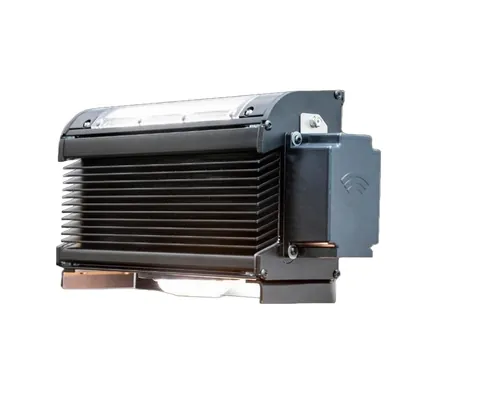
MTLx LED Tunnel & Transit Fixtures
AC-driven distributed-current architecture eliminates discrete driver modules — the primary cause of premature LED fixture failure in high-temperature tunnel environments. IP66/IP67 sealed, IK10 impact-rated, 50,000+ hour rated lifespan. BABA/BAA compliant, manufactured in Central Islip, NY.
View Product
clearNET Mesh Control System
Wireless mesh network providing real-time fixture health monitoring, battery-backup status verification, and zone-level control across all deployed fixtures — without dedicated trackside control cabling. Each node relays fault data through the fixture chain to centralized dashboards.
View ProductRelated Case Studies
NYC MTA Enhanced Station Initiative
20+ custom LED fixture configurations deployed across 15+ NYC MTA subway stations. Custom-engineered for each station’s unique constraints with clearNET wireless mesh monitoring throughout.
Read Case Study Passenger Rail — AmtrakAmtrak Hudson River Line
clearNET wireless mesh control across an active Empire Corridor passenger rail segment — real-time per-fixture telemetry and BABA-compliant unified-package documentation for FRA reporting.
Read Case Study Transit — AirportBWI Marshall Airport
Concourse and ramp lighting modernization at Baltimore/Washington International Thurgood Marshall Airport, delivering BABA-compliant fixtures for federal capital improvement reporting.
Read Case StudySpecifying lighting for a transit or tunnel project?
Our transit lighting engineers provide custom fixture specifications, photometric layouts, NFPA 130 compliance packages, and BABA/BAA documentation for FTA-funded capital programs. Contact us to discuss your project.
Request Project Consultation